The centre
The Crossroads
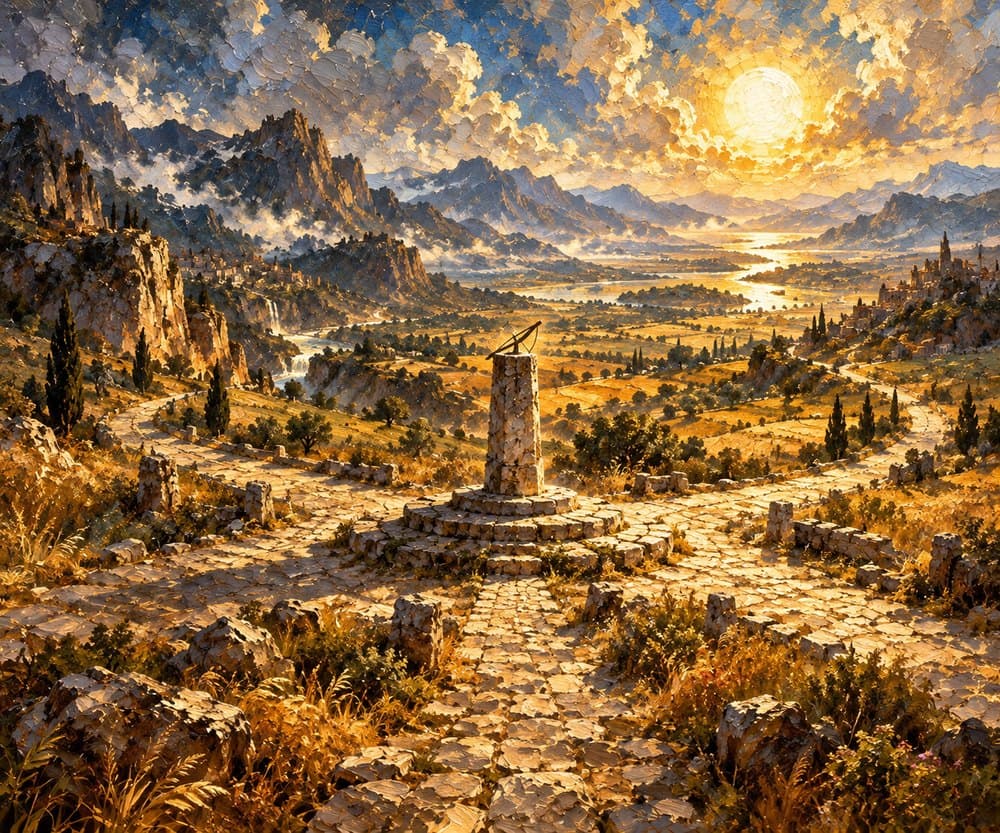
The still centre where every road meets. It holds the whole board in balance and has no path of its own.
Reading the terrain of this hour
Sky & Season7 min read
Most of Sky & Season is about you: your core essence, your seasons, the twelve rooms of your star map. Those were set at the moment you were born, and they change slowly.
The Strategy Board is different. It is not drawn from your birth at all. It is drawn for this hour — the hour you open it, or the hour you ask a question. Every two hours the land is redrawn, the way a coastline changes with the tide.
So if your star map is the house you live in, the Strategy Board is the weather and the terrain outside the door right now. It answers a practical question: given where things stand this hour, which way should I move?
The board is a three-by-three square. Each square is a piece of land facing one direction.
Picture standing in the middle of a valley at The Crossroads. Around you lie eight other grounds, one for each direction: The Deep Ford to the north, The Sunlit Terrace to the south, The Thunder Grove to the east, The Marsh Market to the west, and four more in the corners — The Stone Bridge, The Wind Pass, The Open Plain and The High Seat.
The grounds themselves never move; the Sunlit Terrace is always in the south. What changes every two hours is everything that passes across them: which path is open, what the sky is doing, and who is walking there.
The centre
The still centre where every road meets. It holds the whole board in balance and has no path of its own.
North · water
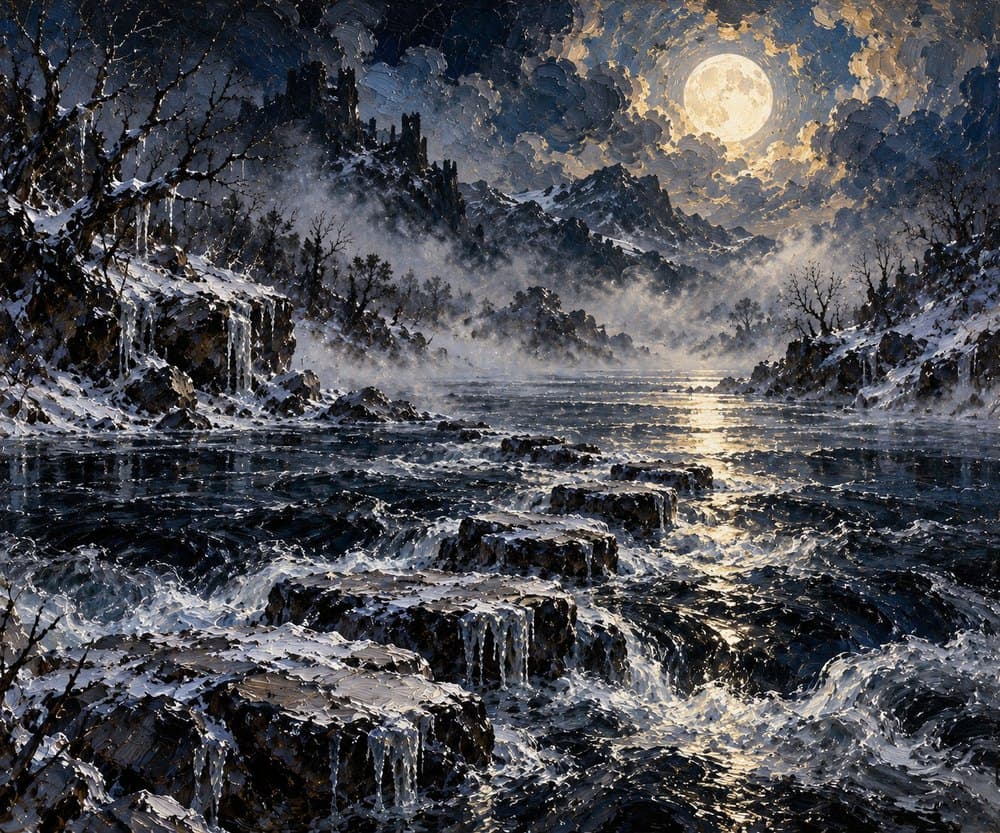
Dark water running fast between stepping-stones. What you cannot see matters most here.
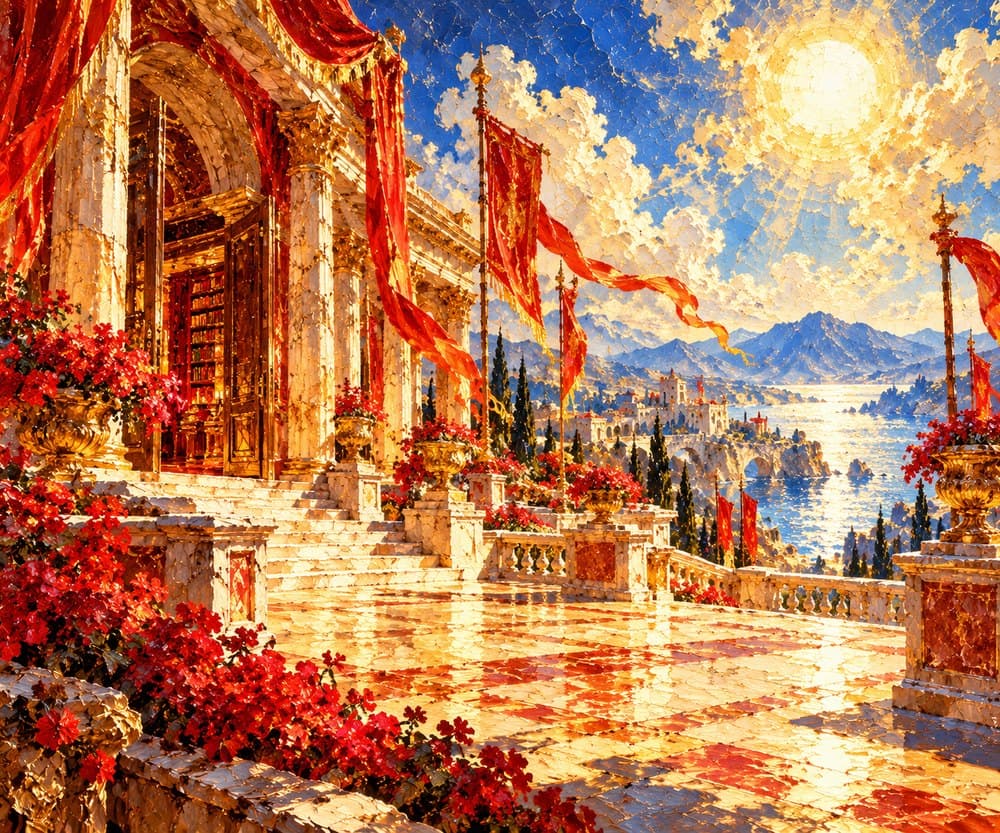
South · fire
Full noon light and nowhere to hide. Everything is seen and admired, though not always as deep as it looks.
You do not need to know anything about the old system. Six steps are enough.
One ground carries a small gold marker with your own painting on it. That is you — not you for life, but you in this hour. Read its name first. Standing on The Open Plain feels very different from standing on The Deep Ford.
Another ground carries a cream marker: the matter. Think of it as whatever you are carrying into this hour — the email you have not sent, the talk you are planning, the decision on your desk. Sometimes you and the matter share the same ground; then everything happens in one place, and that ground deserves a slow, close read.
Every ground is made of one of five natural elements, and elements feed or hold each other. The board puts it in one sentence:
Tap any ground and it turns over to tell you four things, from the top down: who walks with you, what the sky is doing, which way is open, and what the ground holds. The companion and the sky are things you cannot change — luck and timing. The way is the part you choose. The ground is the plain fact underneath. The next guide, The Four Layers of the Strategy Board, meets every character one by one.
A ground drawn with a dashed edge and marked hollow ground is empty this hour. Whatever looks solid there — an offer, a promise, a plan — may not hold its weight yet. It is not a disaster; it is a reason to wait for the next board before leaning on it.
When the direct route is poor, the board does not just say no. It points to another ground where a good way is open — the sidestep. The idea is very old: if the front gate is blocked, you do not break it down; you walk round to the side door that is already open. In everyday life that might mean changing the order of things, the person you speak to first, or the place you meet.
It is mid-afternoon. You open the board and find yourself on The Wind Pass, where The Resting Way is open under The Clear Frost, with The Sky Rider beside you. The matter — a tricky conversation with a client — stands on The Marsh Market, and the board says its ground pushes against yours.
Read plainly: you are clear-headed and well supported, but this is an hour for talking things through, not for forcing an outcome, and pressing the client directly is likely to cost you. The board suggests a sidestep to The Thunder Grove, where The Open Way is open. In real life: send the friendly note that opens the door, and save the hard conversation for a better board.
The board is on every chart page, redrawn for the hour you open it. Open your free chart and choose The Strategy Board, or explore Mei’s sample chart first.
For the curious: in the classical tradition this board is the hour chart of Qi Men Dun Jia (奇門遁甲). Switch to the Classic lens on your chart to see its palaces, doors, stars and deities, or read how the charts are calculated.
Free, private, under a minute.